
What a project foundation needs before AI coding
Before asking an AI agent to change a product, make the outcome, source material, limits, and accountable owner clear enough to review.
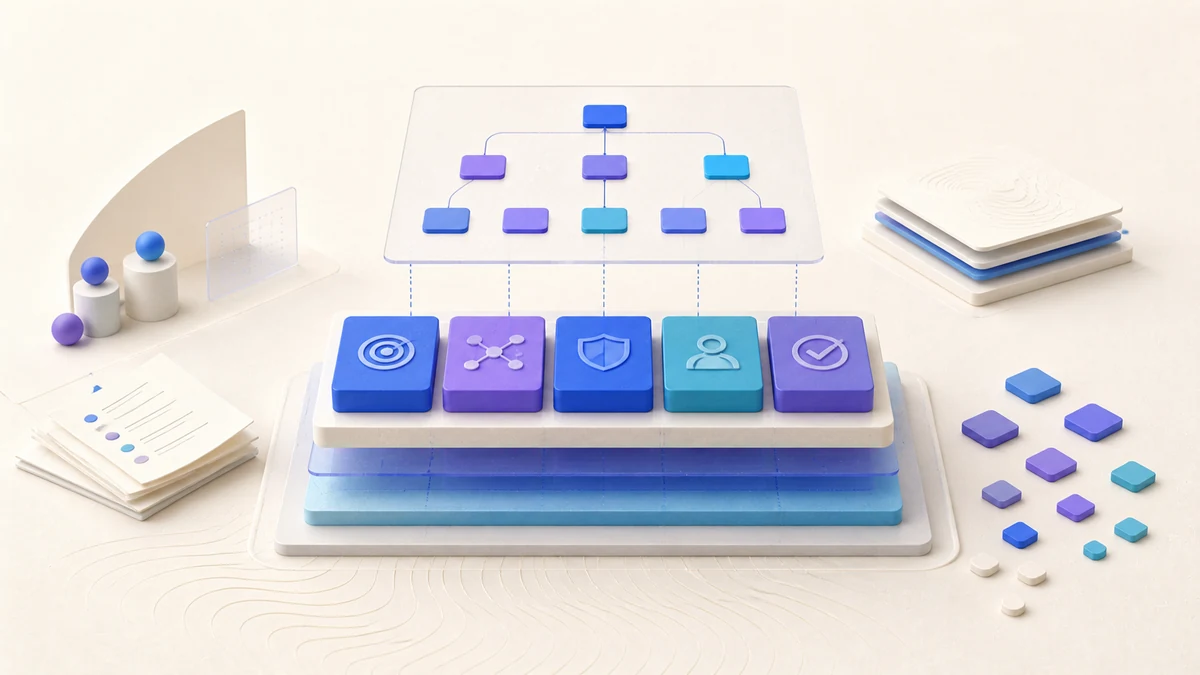
AI coding works best when the request has a real starting point. “Build the next version” is not a starting point. Neither is a folder of notes with no clear indication of which parts matter for the current decision.
Before an AI agent is asked to make a consequential change, a project needs a foundation that is small enough to review and clear enough to challenge.
Start with the outcome, not the feature list
The first question is not “what should the agent build?” It is “what outcome are we trying to achieve or protect?”
For example, a founder may need customers to complete an onboarding step without confusing an existing billing flow. That is more useful than a broad request to “improve onboarding,” because it points to the decision, the constraint, and the likely places where a change could cause harm.
The foundation should make the current goal and its boundary plain:
- the intended outcome;
- what is not part of this change;
- the decision that must be made now;
- the person accountable for that decision.
Gather the sources that actually apply
A project foundation is not a document dump. It is a reviewed starting point for a specific product and, later, for a specific change.
That may include an existing product decision, a relevant workflow description, a known constraint, a design reference, or a record of an unresolved problem. It should also say what is missing. A source that is outdated, contradictory, or only partly understood should not quietly become a fact because it was included in a prompt.
The goal is not perfect completeness. The goal is to avoid treating unknowns as settled requirements.
Keep responsibility visible
AI-assisted work does not remove the need for judgment. Someone still has to decide whether the scope is appropriate, whether access is allowed, whether a security concern needs review, and whether the result is acceptable.
That person may consult specialists. They may authorize an agent to carry out a bounded task. But the responsibility should remain visible rather than being implied by a prompt or hidden behind an automated workflow.
Define how the result will be checked
The foundation also needs a simple answer to: “How will we know whether this change is good enough?”
That answer might include acceptance expectations, a validation step, and known limits of the evidence. It should not promise that a test result alone settles every product, security, or delivery question.
When the work returns evidence, the accountable human can decide what changed, what remains uncertain, and what needs to become part of the project’s living context.
How the AI CTO maintains the foundation
Brainfab AI CTO keeps the Project Foundation coherent as the product changes. It connects the outcome, durable sources, ownership, open questions, technical decisions, and known boundaries before a bounded Work Context informs coding-agent work.
That makes the foundation part of an active technical process rather than a one-time inception document. The AI CTO owns preparation and continuity; consequential approval, permissions, security judgment, acceptance, and escalation remain human decisions.