
For founders stuck with a serious Bubble app
Turn Bubble Into Real Software
We reverse engineer your Bubble app into a workspace and clear conversion foundation you or your engineer can use without guessing what is hidden inside.
The problem we solve
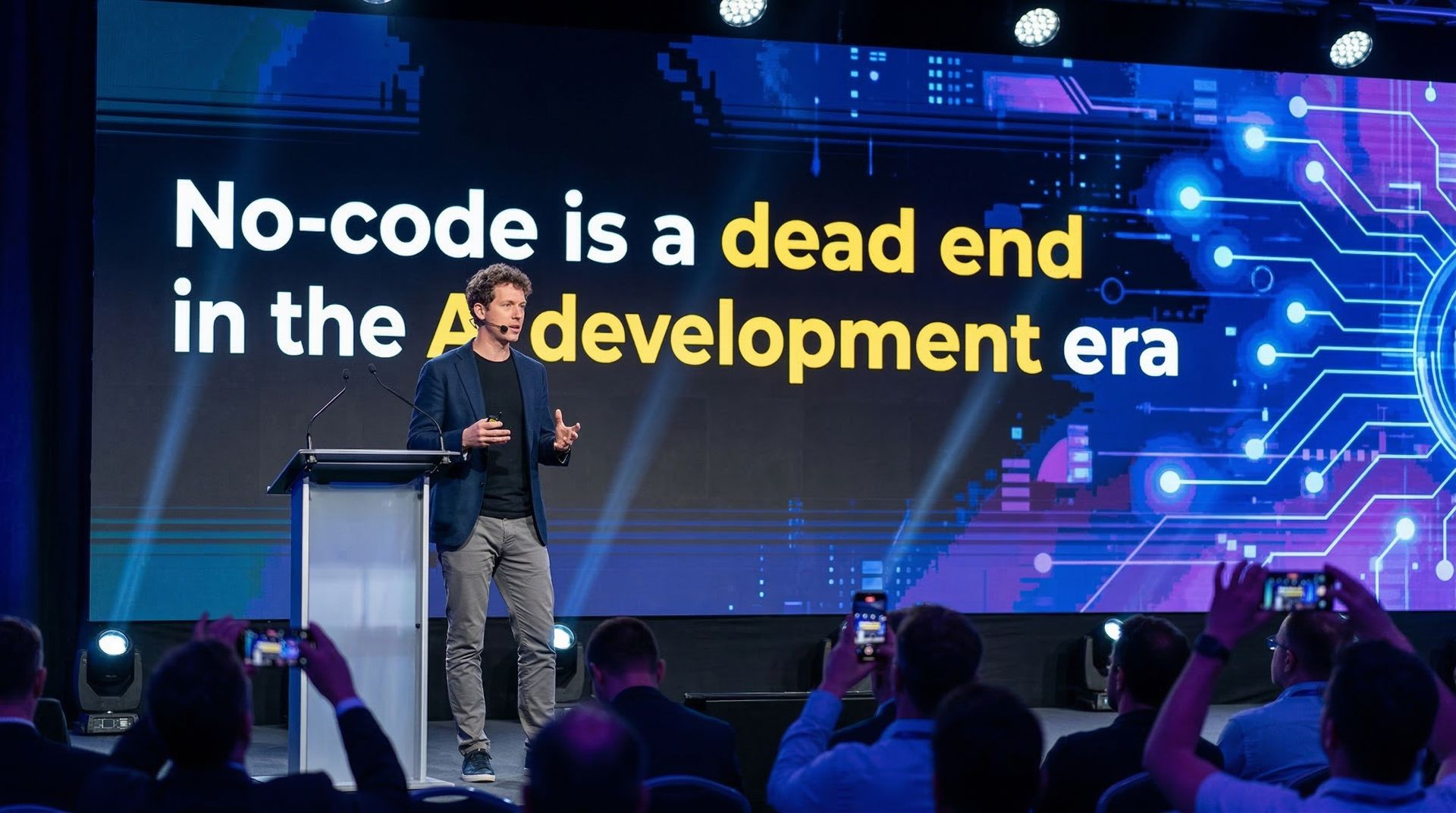
Why serious no-code products become an AI-era dead end
No-code apps become a problem when critical logic is trapped in platform-controlled systems, forcing manual work and blocking a safe move to a modern stack.
Manual development
A serious Bubble product still depends on manual logic changes, hidden workflow editing, and brittle internal knowledge.
No AI leverage
AI-assisted engineering can help a codebase. It cannot reason cleanly about logic trapped in a no-code builder.
Technological bankruptcy
The longer the product stays trapped, the more the eventual modernization move happens under pressure.
How it works
How Brainfab reverse engineers a Bubble app for code conversion
The process is built to make a trapped no-code app understandable again. Brainfab reconstructs the real workflows, UX, UI, and data logic so the next conversion step can be scoped on a solid foundation.
- 1
Share the current app, export file, or access for system scribing.
- 2
Brainfab reverse engineers the system logic, UX, UI, and data schema.
- 3
You get an AI-ready workspace and a clearer foundation for the next conversion step.
The platform behind the work
Brainfab turns trapped logic into an AI-ready development system
The audit is backed by the same platform Brainfab uses to manage development: reverse engineering, structured specs, workspace coordination, MCP-connected IDE work, and supervisor/worker orchestration.
Reverse engineering
Hidden Bubble workflows become documentation, data maps, and implementation specs.
Managed AI development
MCP-connected engineering work and supervisor/worker orchestration keep the rebuild plan executable.
Workspace control
The audit output lands in a workspace that can keep requirements, tasks, and conversion decisions connected.
What you get
What a Bubble-to-Code Conversion Audit actually delivers
A founder or CTO does not need another document. They need a conversion-ready foundation that helps remove vendor lock-in, makes the application clearer on a modern stack, and gives the next implementation step something concrete to continue from.
- Workspace
- Code repository
- Architecture blueprint
- Data schema
- Feature specification
- Roadmap
- Product requirements
- QA automation
- Task system
- Design system
- Skills catalog
- AI implementation kit
- Conversion token budget
- Engineer fixed budget
- Conversion timeline
A migration-ready workspace and repository that let the conversion move forward
Client Questions
Leaving Bubble: the real questions founders and tech leads ask first
The practical questions usually come first.
Do we need better documentation before we start?
No. The offer exists because most teams do not have reliable documentation when the modernization question becomes urgent.
What if the app is messy or too large?
That is the normal case. The point of the audit is to turn a messy, trapped system into something you can evaluate and plan around.
Will this just end in another report?
No. The output is structured so it can continue into blueprint or conversion work instead of dying as a one-off document.
Can Brainfab help with the conversion too?
Yes, but the first credible promise is a clearer path into that decision, not instant migration magic.
Next step
Start with the paid step that makes the conversion path clearer
If you already have a Bubble export or product walkthrough, start with the $99 diagnostic and move into the full audit only if the app justifies it.
Start here
Bubble Export Diagnostic
Start with the required first step, then move into the full audit only after the export review confirms the app needs it.
$99 fixed first step